

-
Tension Dispersion
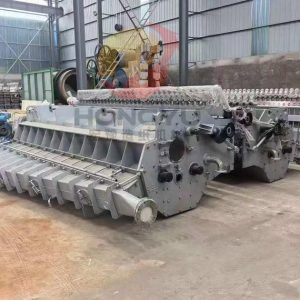
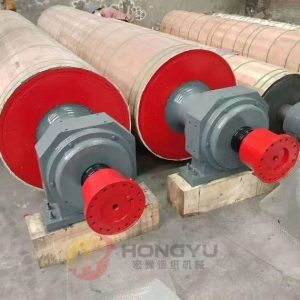
When the wet paper web (with low dryness and poor strength) wraps around the curved surface of the roll, the arc structure distributes the tension evenly across the entire width of the paper web. This avoids localized stress concentration that often occurs with flat rolls, preventing the paper web from stretching or tearing at weak points.
-
Smooth Web Guiding
The curved roll is installed at a specific angle matching the paper web’s travel path. As the web passes over the roll, the curved surface gently changes the web’s moving direction, ensuring a stable, non-slip transfer between different machine sections. It also eliminates edge curling by keeping the web flat during the direction change.
-
Wrinkle Prevention
The arc design creates a slight stretching effect on the paper web’s transverse direction. This stretches out minor wrinkles formed in the previous process, maintaining the flatness of the paper web and laying a foundation for consistent drying and winding quality.
-
Speed Synchronization
The curved transfer roll is driven synchronously with the main paper machine line. Its rotational speed is precisely calibrated to match the paper web’s running speed, avoiding tension fluctuations caused by speed mismatches and ensuring continuous, stable production.
admin –
It has survived not only five centuries, but also the leap into electronic typesetting unchanged. It was popularised in the sheets containing lorem ipsum is simply free text five centuries, but also the leap into.