
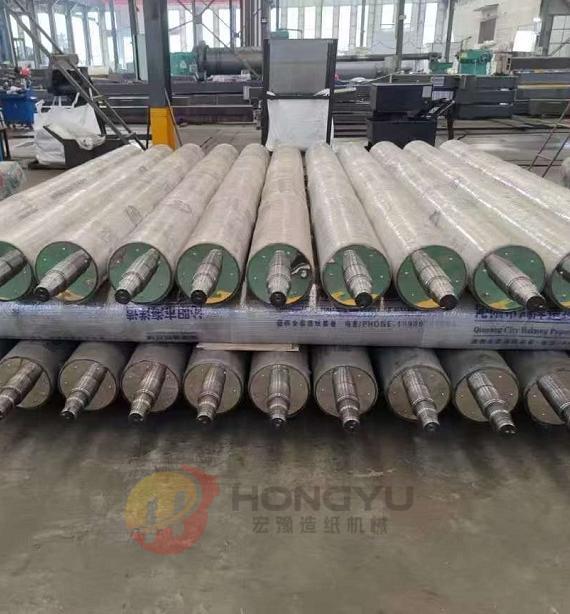
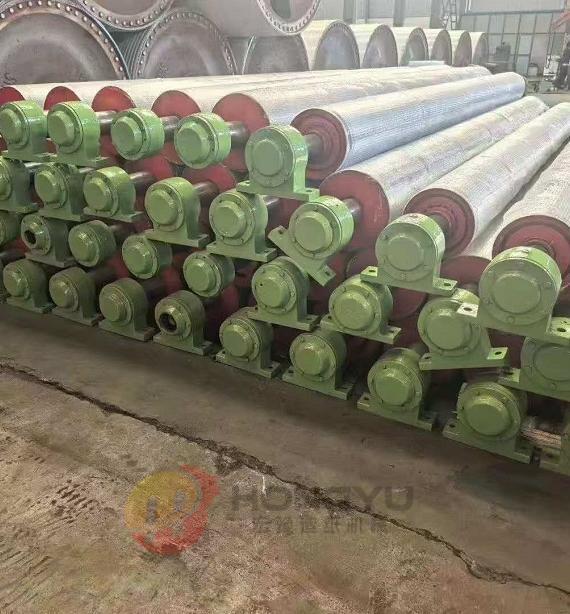
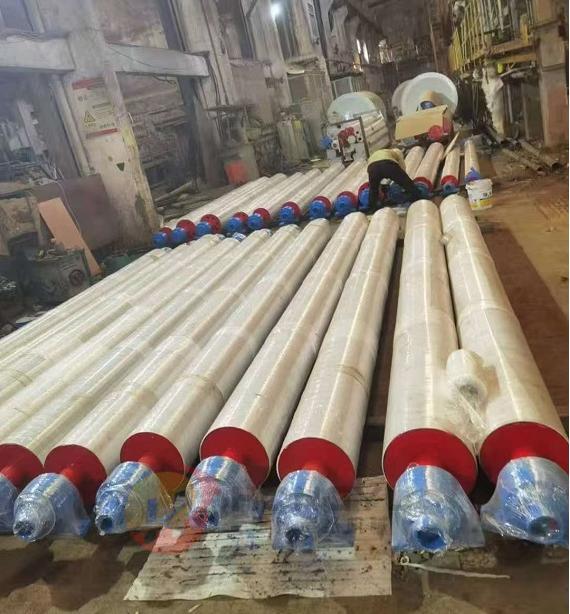
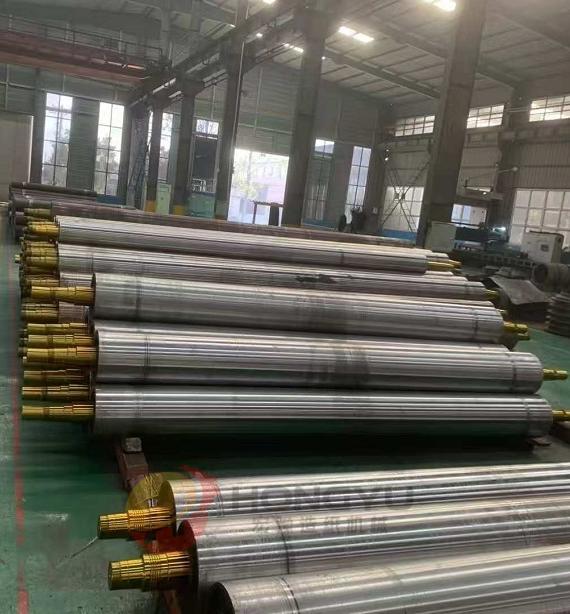
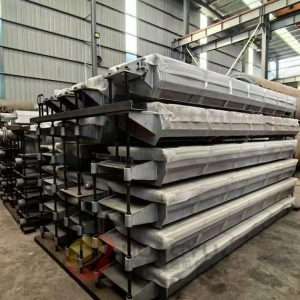
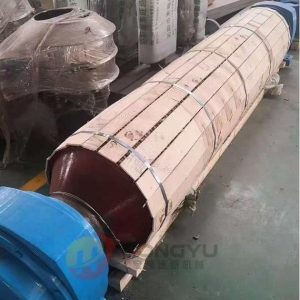
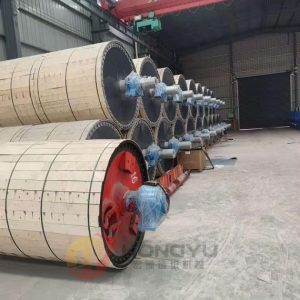
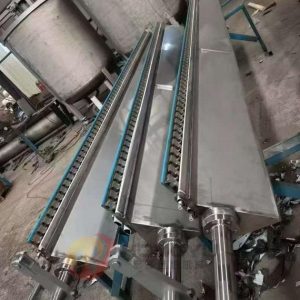
A guide roll is a fundamental auxiliary component in papermaking machines and pulp processing lines, designed primarily to direct, align, and stabilize the movement of flexible materials throughout the production process. These materials include forming fabrics, press felts, dryer screens, and the paper web itself (from wet web to finished paper).
Key Functions
- Precision Guidance & Alignment
It keeps moving fabrics, felts, or paper webs on their intended path, preventing lateral deviation (off-tracking) that could cause material damage, paper breaks, or production downtime. Most guide rolls are paired with sensor-based adjustment systems to correct alignment in real time.
- Tension Regulation
By maintaining consistent contact with the material surface, guide rolls help control and stabilize tension levels, ensuring uniform stretching and smooth transmission without wrinkles or slack.
- Support for Heavy Loads
In high-speed paper production lines, guide rolls provide structural support for heavy, wide-width fabrics or paper rolls, reducing vibration and ensuring steady operation.
Core Design Features
- Material: Constructed from corrosion-resistant stainless steel or coated steel to withstand the humid, pulp-contaminated environment of paper mills; some rolls have rubberized surfaces to enhance friction and protect delicate materials.
- Structure: Precision-machined cylindrical surfaces for smooth rotation; equipped with sealed bearings to prevent pulp fiber or moisture ingress, extending service life.
- Customization: Available in various diameters and lengths to match the width of different paper machines and processing lines (e.g., tissue, packaging paper, cultural paper production).
Application Scenarios
Guide rolls are installed across multiple sections of a paper machine, including the forming section (guiding forming wires), pressing section (aligning press felts), drying section (supporting dryer screens and paper webs), and calendaring/winding sections (directing finished paper rolls).
admin –
It has survived not only five centuries, but also the leap into electronic typesetting unchanged. It was popularised in the sheets containing lorem ipsum is simply free text five centuries, but also the leap into.