
Core Structure & Working Principle
-
Basic Structure
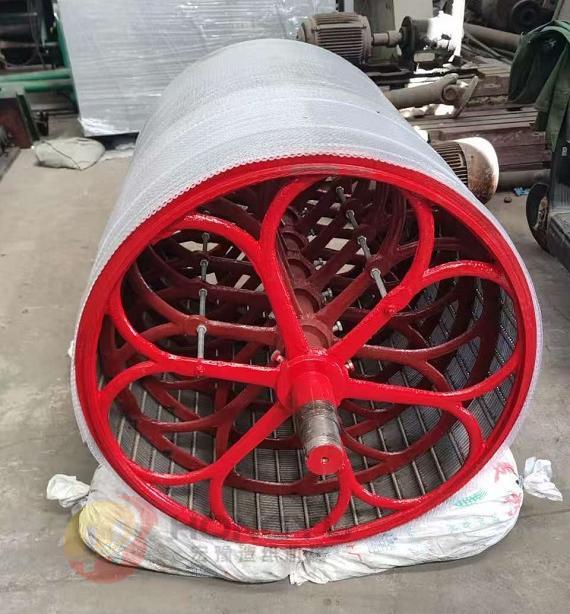
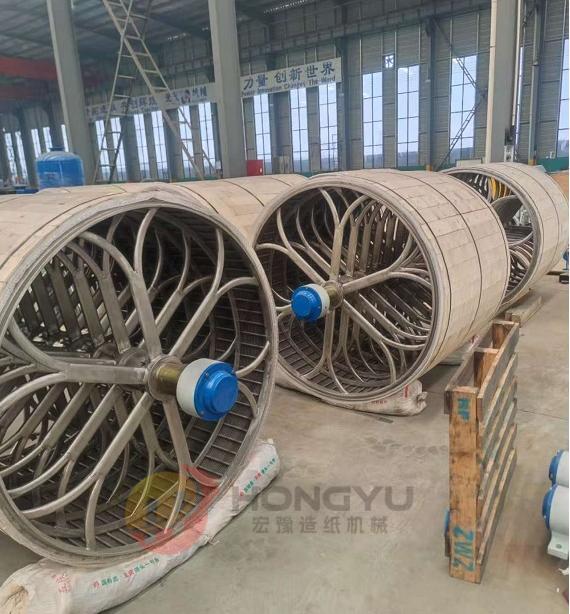
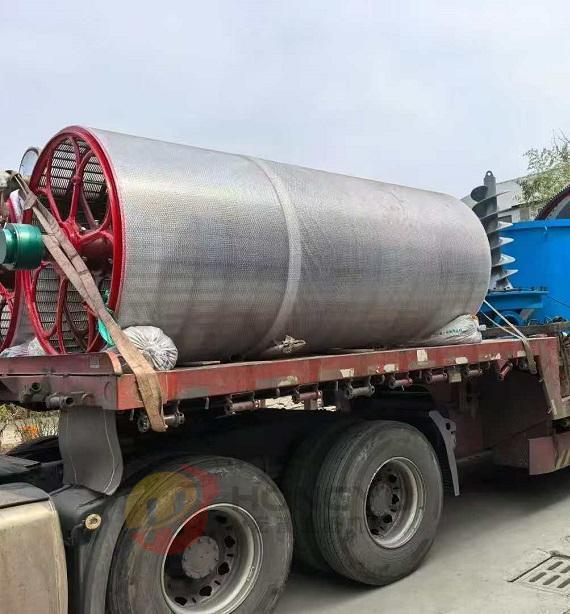
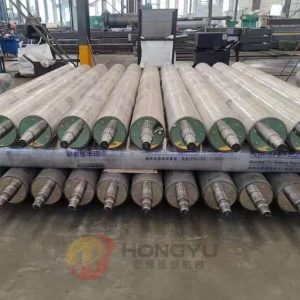
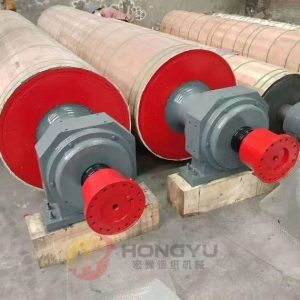
A cylinder mould consists of a rigid cylindrical frame, a layer of fine metal or synthetic wire mesh (the core filtering part), and end supports for rotation. The mesh has precise aperture sizes, which are tailored based on the type of paper being produced (e.g., coarser mesh for packaging paper, finer mesh for cultural paper). The frame provides structural stability, while the mesh acts as the critical barrier for fiber separation from slurry water.
-
Forming Mechanism
When the cylinder mould rotates and partially submerges into the pulp vat, the water in the slurry passes through the mesh and is discharged via the mould’s internal drainage system, while cellulose fibers are retained on the mesh surface. As the mould continues to rotate, a continuous, uniform wet paper web accumulates on the mesh. This wet web is then transferred to the subsequent pressing and drying sections for further dewatering and curing to form finished paper.
Key Functions & Application Scenarios
- Fiber Retention & Forming: It is the core of the cylinder paper machine’s forming system, ensuring that pulp fibers are evenly distributed to form a stable wet web, which directly affects the uniformity of the final paper’s thickness and texture.
- Preliminary Dehydration: Reduces the water content of the slurry at the forming stage, lightening the load on subsequent pressing equipment and improving the overall production efficiency of the paper machine.
- Application Scope: Mainly used in small and medium-sized cylinder paper machines for producing low-to-medium grade paper such as wrapping paper, corrugated base paper, and household paper, thanks to its simple structure, low maintenance cost, and reliable forming performance.
There are no reviews yet.