
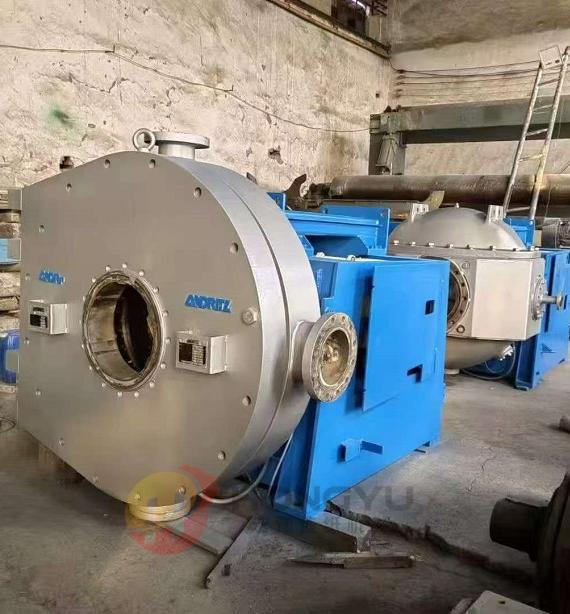
Core Structure & Working Principle
-
Basic Structure
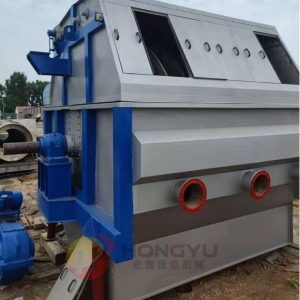
A typical thermal defibrator consists of four main systems:
- Feeding system: Transports pre-processed wood chips into the equipment continuously and stably.
- Steam heating chamber: The core pressure vessel where wood chips are treated with high-temperature (160–190°C) and high-pressure (0.6–1.0 MPa) saturated steam, softening the lignin and hemicellulose in wood to loosen fiber bonds.
- Grinding system: Composed of a rotating grinding disc and a fixed disc with precision-toothed patterns, which applies strong shearing and grinding forces to the softened wood chips.
- Discharge system: Collects and cools the separated fibers, and removes excess steam for recycling or treatment.
-
Operational Mechanism
First, dried wood chips are fed into the sealed steam heating chamber and maintained under high temperature and pressure for a set period (typically 2–5 minutes). During this stage, lignin (the adhesive between wood fibers) softens and partially melts, reducing the bonding force between fibers. The pre-softened wood chips are then pushed into the grinding gap between the rotating and fixed discs. As the discs rotate at high speed (300–1500 RPM), the wood chips are subjected to intense shearing, tearing, and grinding, breaking down into individual fibers or fine fiber bundles. Finally, the fibers are discharged with steam, cooled to room temperature, and sent to subsequent processes (papermaking pulp blending or fiberboard hot-pressing).
Key Functions & Application Scenarios
- Fiber Separation & Refinement: Achieves efficient separation of wood fibers while maintaining fiber length and integrity, producing fibers with high surface activity and bonding capacity.
- Raw Material Adaptability: Processes various lignocellulosic materials, including softwood, hardwood, and recycled wood scraps, for both high-quality wood pulp production and fiberboard manufacturing.
- Process Integration: Combines thermal softening and mechanical grinding into one step, reducing pulping energy consumption compared to separate heating and grinding processes, and improving production efficiency.
- Quality Control: By adjusting steam temperature/pressure and grinding gap, it can tailor fiber fineness and uniformity to meet the requirements of different products (e.g., longer fibers for packaging paper, finer fibers for high-density fiberboard).
There are no reviews yet.