
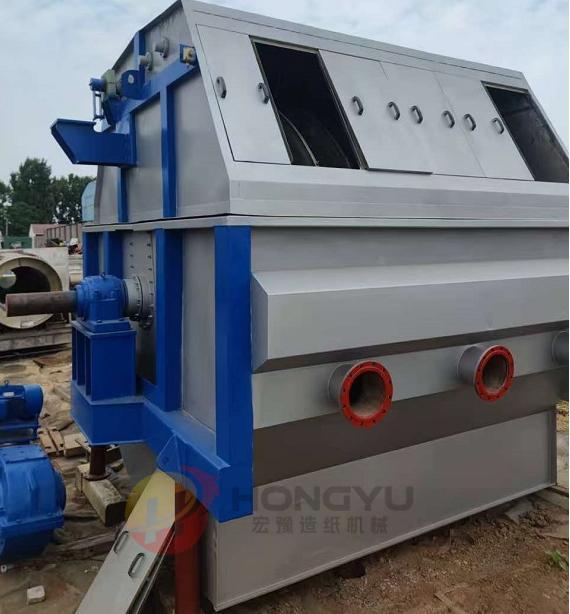
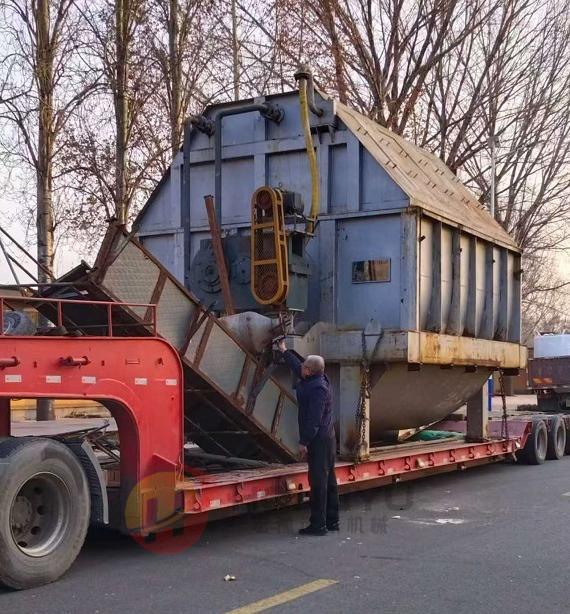
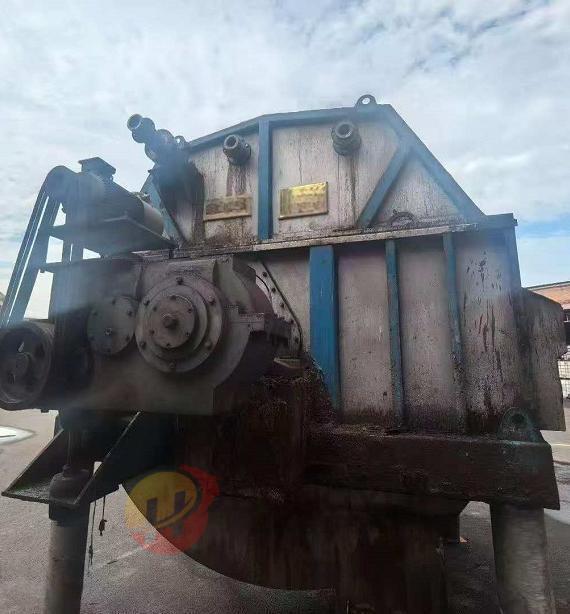
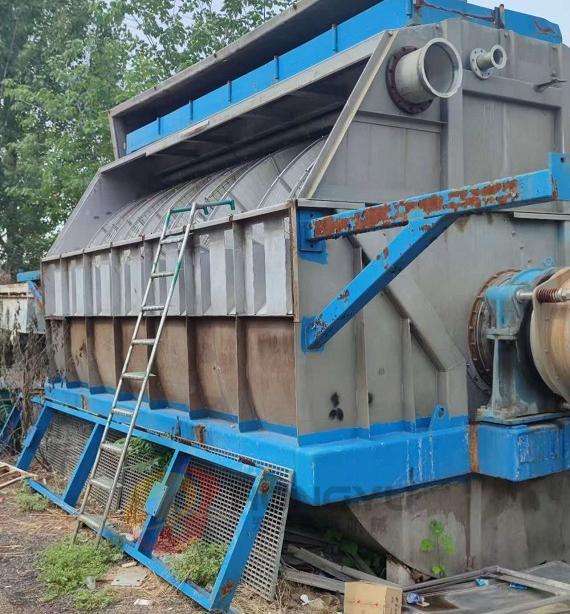
Core Structure & Working Principle
-
Basic Structure
A typical multi-disc thickener is composed of five core components:
- Tank body: A sealed or open vessel that holds the dilute pulp slurry and provides a stable environment for filtration.
- Filter disc assembly: The core working unit, consisting of 6–20 circular filter discs (made of polyester or stainless steel mesh) mounted on a horizontal rotating shaft. Each disc is divided into several fan-shaped sectors for easy maintenance and cleaning.
- Vacuum system: A suction unit connected to the inner cavity of the filter discs, which creates negative pressure to draw water through the filter mesh while retaining pulp fibers on the disc surface.
- Washing and discharge system: A spray pipe for rinsing residual impurities on the disc surface, and a scraper or discharge roll that removes the thickened fiber mat from the discs.
- Drive mechanism: A motor and reducer that drives the filter disc assembly to rotate at a low speed (usually 0.5–3 RPM) for continuous operation.
-
Operational Mechanism
Dilute pulp is pumped into the tank body, submerging part of the rotating filter disc assembly. As the discs rotate, the vacuum system activates to pull water through the filter mesh into the disc’s inner cavity, leaving a layer of wet fiber mat (the thickened pulp) on the disc surface. When the fiber-covered disc sector rotates out of the slurry, the vacuum is maintained briefly to further dewater the mat, and a spray of clean water may be applied to wash away soluble impurities. Finally, as the sector reaches the discharge zone, the vacuum is released, and a mechanical scraper peels off the thickened pulp mat into a collection chute, which is then sent to subsequent pulping or papermaking processes. The filtered water (filtrate) is collected and recycled as process white water, improving water utilization efficiency.
Key Functions & Application Scenarios
- Pulp Concentration: Increases the consistency of low-concentration pulp to meet the requirements of downstream processes (e.g., refining, bleaching, or papermaking), reducing the volume of slurry for more efficient transportation and processing.
- White Water Recovery: Recycles clean filtrate from pulp dewatering for reuse in pulping or washing, cutting down fresh water consumption and lowering wastewater discharge in papermaking plants.
- Low Fiber Loss: The fine filter mesh and gentle vacuum dewatering minimize fiber entrainment in the filtrate, maximizing fiber recovery and reducing raw material waste.
- Continuous Operation: The rotating disc design enables 24/7 uninterrupted dewatering, making it suitable for large-scale pulping lines with high pulp throughput demands, including both virgin pulp and recycled pulp production.
There are no reviews yet.