
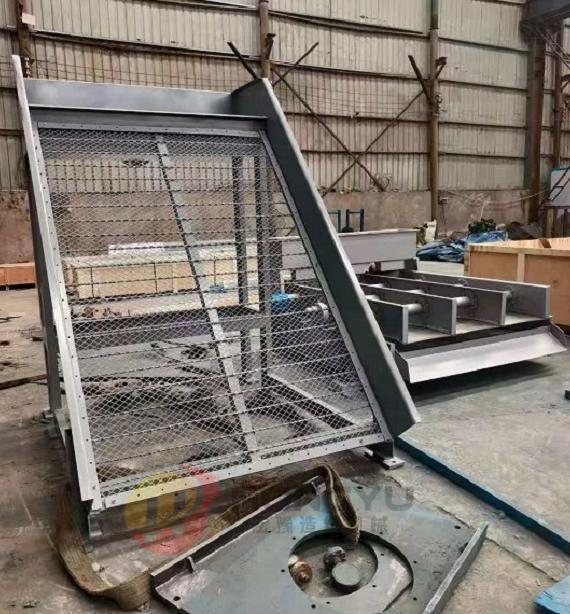
Core Structure & Working Principle
-
Basic Structure
A typical inclined screen has three key components:
- Inclined screen panel: The core filtering unit, a sloped mesh or slotted plate (slot size usually 1–5 mm) made of corrosion-resistant stainless steel or polyurethane. It is tilted at an angle of 15°–30° to balance screening efficiency and material flow.
- Feed distribution box: A trough at the top of the screen panel that evenly spreads dilute waste paper slurry across the screen surface to avoid localized clogging.
- Collection system: Two separate chutes below the screen—one for collecting screened pulp (accepts) that passes through the slots, and another for capturing oversized contaminants (rejects) that slide down the screen surface to the bottom end. Some models add a low-pressure spray system above the screen to wash residual fibers from rejects and enhance impurity separation.
-
Operational Mechanism
Dilute waste paper slurry (consistency typically 1%–3%) is fed into the distribution box and flows down the sloped screen panel under gravity. Small, usable fibers and water pass through the screen’s slots into the accepts chute, which directs the pre-screened pulp to subsequent pulping processes (e.g., fiber separation or concentration). Meanwhile, large lightweight impurities (such as plastic films, rope fragments, uncrushed cardboard chunks, and styrofoam) cannot pass through the slots and slide along the screen surface to the rejects chute for centralized disposal or manual sorting. The gravity-driven flow and mild spray washing also remove excess water from the pulp, achieving a preliminary dewatering effect that increases pulp consistency by 0.5%–1% before it enters downstream equipment.
Key Functions & Application Scenarios
- Coarse Impurity Removal: Targets large, non-fibrous contaminants in the early pre-treatment stage, preventing blockages and wear in downstream precision equipment like pressure screens and fiber separators.
- Low-Cost Pre-dewatering: Achieves mild moisture reduction without complex mechanical or vacuum systems, lowering energy consumption compared to high-powered dewatering devices.
- Waste Paper Adaptability: Ideal for processing low-consistency waste paper slurries (including old corrugated containers and mixed office waste) due to its simple structure and resistance to clogging by bulky impurities.
- Easy Maintenance: The screen panel is easy to access and replace, and the device has no moving parts (except optional spray systems), minimizing downtime for repairs and reducing long-term operational costs.
There are no reviews yet.