
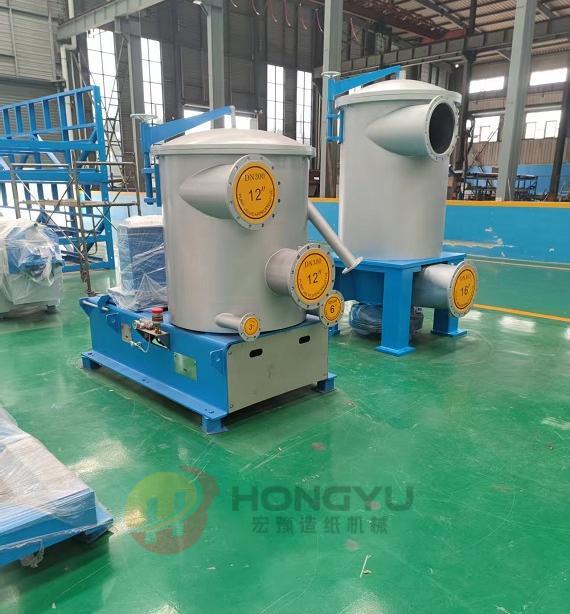
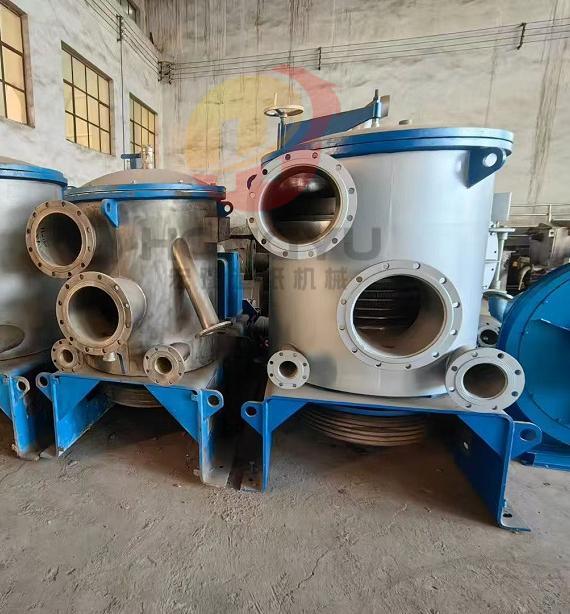
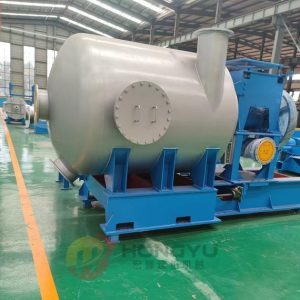
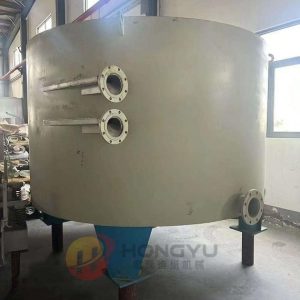
The pressure screen is a high-precision pulp screening device in papermaking pulping lines, engineered to separate fine impurities and unprocessed fiber bundles from pulp under controlled pressure conditions. As a key mid-stage purification tool between primary screening and refining, it ensures pulp uniformity and purity, laying the foundation for high-quality paper formation and protecting downstream papermaking equipment from blockage or wear.
Core Structure & Working Principle
-
Basic Structure
A typical pressure screen consists of five core components:
- Screen housing: A sealed, pressure-resistant metal vessel that maintains stable internal pressure (usually 0.1–0.3 MPa) during operation.
- Screen basket: The critical filtering component, a cylindrical or conical mesh made of stainless steel or polyurethane with precisely sized slots (ranging from 0.15–0.8 mm). It divides the housing into an inlet zone (impure pulp) and an accepts zone (purified pulp).
- Rotating rotor: A motor-driven component with vanes or blades that rotates close to the screen basket surface. It creates localized turbulence and negative pressure to prevent mesh clogging and push qualified fibers through the slots.
- Pulp inlet/outlet system: A pressurized inlet for feeding impure pulp, a top accepts outlet for discharging filtered pulp, and a bottom rejects outlet for collecting retained impurities.
- Pressure control system: Gauges and valves that monitor and adjust internal pressure to maintain screening efficiency and stability.
-
Operational Mechanism
Pressurized pulp slurry is pumped into the screen’s inlet zone, filling the space around the screen basket. The rotating rotor generates high-speed fluid flow near the basket surface, which:
- Prevents the screen slots from clogging with fiber flocs or debris (a process called self-cleaning).
- Applies gentle shear force to loosen compacted fiber bundles, allowing individual qualified fibers to pass through the slots into the accepts zone.
Meanwhile, oversized impurities (e.g., fine wood debris, plastic particles, and undissociated fiber clumps) cannot pass through the slots and are concentrated in the inlet zone. These rejects are continuously discharged through the bottom outlet for either reprocessing or disposal. The sealed, pressurized environment ensures high pulp throughput and consistent screening accuracy, even for low-consistency slurries.
Key Functions & Application Scenarios
- Fine Pulp Purification: Removes micro-impurities and unrefined fiber bundles that primary vibrating screens cannot eliminate, reducing paper defects like spots, holes, or uneven formation in finished products (especially cultural paper and coated paper).
- Self-cleaning Operation: The rotor’s turbulence eliminates manual cleaning downtime, enabling 24/7 continuous operation for large-scale pulping lines.
- Fiber Protection: The low-shear screening process preserves fiber length and integrity, maintaining the physical strength (tensile and burst strength) of the final paper.
- Process Adaptability: Available in inflow, outflow, and dual-flow designs to match different pulping processes (chemical, mechanical, or recycled pulp) and production scales, with customizable slot sizes for specific paper grade requirements.
There are no reviews yet.