
Core Structure & Working Principle
-
Key Structural Features
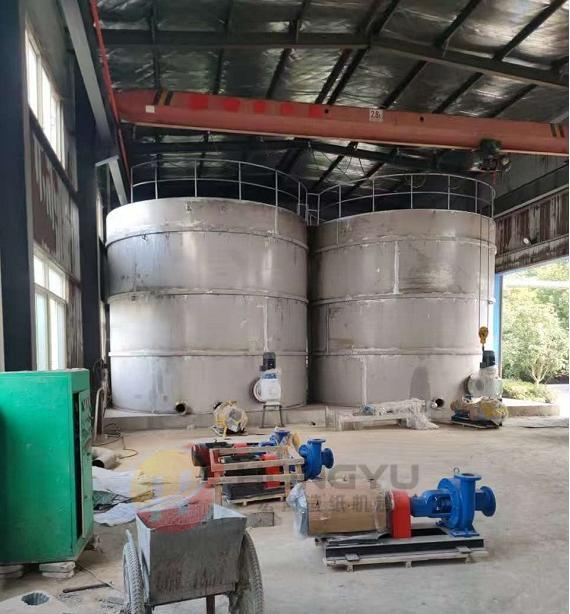
- Tank body: Available in vertical or horizontal configurations, the vessel is typically constructed from corrosion-resistant stainless steel or carbon steel with anti-corrosion coatings (epoxy or rubber lining) to withstand acidic or alkaline pulp slurry. Vertical tanks save floor space for compact workshops, while horizontal tanks are easier to access for maintenance and suitable for low-height installations. The capacity ranges from a few cubic meters for small-scale mills to hundreds of cubic meters for large production lines.
- Agitation system: Most models are equipped with a top-mounted or side-mounted agitator (or propeller for large tanks) to keep pulp fibers suspended and maintain consistent concentration (usually 3%–8% for storage). The agitator operates at low speed (5–20 RPM) to avoid fiber damage while preventing localized sedimentation at the tank bottom.
- Pulp inlet/outlet & control valves: A top or side inlet for receiving pulp from upstream processes (e.g., washers, refiners, deinking machines) and a bottom outlet (fitted with a control valve) to deliver pulp to downstream equipment (e.g., pulp pumps, paper machine headboxes). Some tanks add a recirculation pipeline to further homogenize slurry before discharge.
- Level & concentration monitoring: Integrated sensors track pulp level and consistency in real time, sending data to the central control system to automate inlet/outlet valve adjustments, preventing tank overflow or under-supply to the paper machine.
-
Operational Mechanism
The pulp storage tank functions as a buffer and homogenization unit through a simple but critical workflow:
- Processed pulp (purified, refined, or deinked) is pumped into the tank from upstream stages, with the inlet design distributing slurry evenly to avoid splashing and fiber clumping.
- The low-speed agitator (or propeller) continuously mixes the slurry, creating mild circular flow that keeps cellulose fibers suspended and maintains uniform concentration across the tank volume. This eliminates fiber stratification caused by gravity and ensures consistent pulp quality for downstream use.
- The level and concentration sensors provide real-time data to the control system, which regulates the outlet valve opening to match the paper machine’s pulp demand, ensuring a steady, uninterrupted supply. For batch production, the tank can also store pulp temporarily to bridge gaps between pulping batches and continuous papermaking operations.
- Before discharge, some tanks use a recirculation loop to further blend the slurry, guaranteeing that the pulp delivered to the paper machine meets strict consistency and fiber distribution standards.
Key Functions & Application Scenarios in Papermaking
-
Pulp buffer and supply stabilization
It bridges the gap between batch or semi-continuous pulping processes and the continuous operation of paper machines, preventing production interruptions caused by upstream process fluctuations or equipment downtime. For example, if a pulp washer requires short-term maintenance, the storage tank can supply pre-stored pulp to keep the paper machine running.
-
Pulp homogenization and quality preservation
The built-in agitation system maintains uniform pulp consistency and fiber distribution, avoiding quality defects (e.g., uneven paper thickness, strength variations) caused by inconsistent pulp feed to the paper machine headbox. It also prevents fiber sedimentation and clumping, which could clog downstream pumps or screens.
-
Process flexibility and production scheduling
The tank allows mills to adjust production schedules by storing surplus pulp during peak pulping output and releasing it during high-demand papermaking periods. It also supports multi-grade pulp storage (e.g., virgin pulp and recycled pulp in separate tanks) for flexible switching between different paper product lines.
-
Adaptability to different pulp types
Specialized tanks (e.g., insulated pulp storage tanks for high-temperature bleached pulp, sealed tanks for specialty pulp with chemical additives) can be customized to store various pulp types, from low-consistency unbleached pulp to high-consistency bleached pulp, meeting the needs of diverse paper products (cultural paper, tissue paper, packaging paper).
There are no reviews yet.