
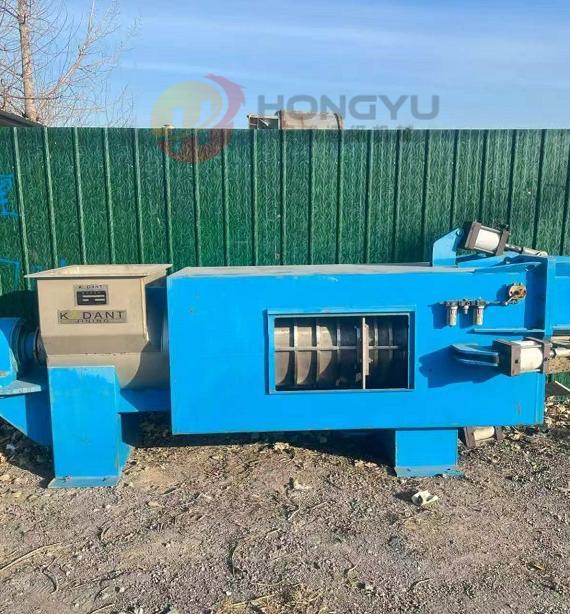
Core Structure & Working Principle
-
Basic Structure
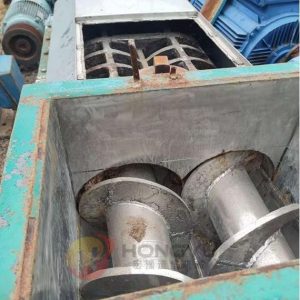
A typical screw press dewaterer consists of four core components:
- Tapered screen cylinder: A perforated or slotted stainless steel cylinder (slot/aperture size usually 0.2–0.5 mm) that forms the main dewatering chamber, with a diameter that narrows from the feed end to the discharge end to create increasing compression pressure.
- Variable-pitch screw rotor: The core squeezing component, installed inside the screen cylinder, with screw pitches that gradually decrease toward the discharge end. It is driven by a motor and reducer to rotate at a low to medium speed (10–50 RPM).
- Feed hopper & discharge outlet: A hopper for feeding pre-concentrated pulp into the device, and a discharge port at the narrow end of the screen cylinder (often equipped with a pressure-adjustable choke plug to control dehydration intensity).
- Filtrate collection system: A trough or tank surrounding the screen cylinder that collects the water squeezed out of the pulp for recycling or wastewater treatment.
-
Operational Mechanism
Pre-concentrated pulp is fed into the wider feed end of the screen cylinder, where the rotating screw rotor pushes the pulp toward the narrower discharge end. As the screw pitch decreases and the screen cylinder tapers, the space for pulp gradually shrinks, creating increasing mechanical extrusion pressure on the pulp. Under this pressure, free water in the pulp is squeezed out through the slots or apertures of the screen cylinder into the filtrate collection system, while the pulp fibers are retained and compacted into a high-consistency pulp cake. The choke plug at the discharge outlet can be adjusted to fine-tune the internal pressure of the dewatering chamber, ensuring the final pulp consistency meets process requirements. The dehydrated pulp cake is then discharged from the outlet and sent to subsequent drying, baling, or papermaking processes, and the collected filtrate is typically recycled as process white water to improve water utilization.
Key Functions & Application Scenarios
- Deep Pulp Dewatering: Achieves higher pulp consistency than vacuum-based thickeners, reducing the moisture content of pulp to minimize energy consumption in downstream drying processes (a major energy-intensive step in papermaking).
- Recycled Pulp Treatment: Especially suitable for dewatering waste paper pulp containing sticky or fibrous impurities, as its mechanical extrusion can effectively separate water from complex pulp systems without clogging easily.
- Compact & Efficient Operation: Its small footprint and continuous dewatering capability make it ideal for pulping lines with limited space, and it requires minimal manual intervention for 24/7 stable operation.
- Resource Conservation: The recycled filtrate reduces fresh water consumption, and the high-consistency pulp cake cuts down transportation costs by lowering the overall volume and weight of pulp for off-site processing or storage.
There are no reviews yet.